
Teenage Laser Radial World Champion to Masters Finn World Champion.
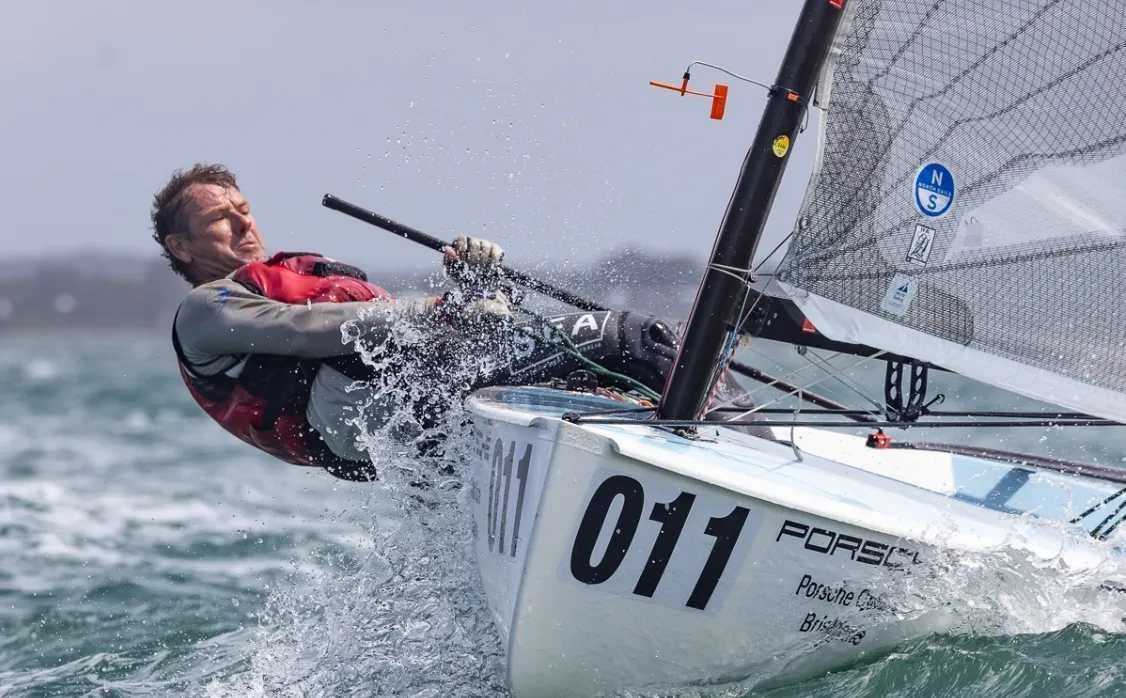
A career does not have to follow a conventional timeline to be complete. Sometimes it unfolds later, in different ways, with a deeper sense of meaning.
Brendan Casey burst onto the international scene as a teenager with back-to-back Laser Radial World Championships in 1995 and 1996. This was the kind of breakout success that usually sends a young sailor smoothly into an Olympic campaign.
Most Olympic campaigns follow a simple formula: spot talent early, commit fully, and build toward one shining moment. Brendan Casey’s path never followed that script. Looking back, it is hard not to wonder how it might have unfolded under a different set of choices. The talent was always there. The skill never left him. With a narrower focus or better guidance, it is easy to imagine him standing on an Olympic podium. Yet his career unfolded differently.
In Australia, there’s a familiar figure in sport. Not always the most celebrated, rarely the most resourced, but widely respected — the one who keeps showing up. Brendan has spent a lifetime doing exactly that.
After 18 years away from top-level competition, Brendan returned to win the ILCA 7 Masters World Championship, the Finn Masters World Championship, and a bronze medal at the Finn Gold Cup — all within the span of just under two years. Of those, it was the Finn Masters that meant the most to Brendan. Not because it was the biggest title, but because of what it represented — a return to the class that had defined much of his career, and a victory that came after years away from the highest level of competition.
I coached Brendan in the lead-up to the 2012 London Olympic Games and saw firsthand his mental toughness and level-headedness under pressure. Time and again, he found another gear when it mattered most.
He is universally liked, but that never made him a pushover on the racecourse. To survive in the Finn, you need a certain edge, ego, and machismo in exactly the right proportions, and he has it. His sportsmanship is impeccable, yet when he felt someone was leaning on him or taking advantage of him, he pushed straight back. Brendan was never the least bit intimidated when the breeze turned nasty.
Three Moments That Define Brendan
-
The first came during training in Perth ahead of the 2011 World Championships. We were running practice races with Ben Ainslie and his training partner, who kept fouling Brendan at the starts. It finally boiled over. At one start, Brendan simply stopped on the line, squared up, and for a moment it looked as though he might climb aboard the other boat. Ainslie ended up windward of the pair while the fleet sailed away. The three boats sat drifting while the two were hashing it out, and Ben shouted for them to get going. Back ashore, the tension had vanished. Brendan and the training partner were laughing — and I am sure they went out for a beer that night.
-
The second came in Hyères, France, during a race sailed in more than thirty-knot Mistral. Everything came down to the final gybe and a short reach to the finish. As a former Gold Cup winner and Olympic medalist, I was stunned to see most of the leaders, former world champions and Olympic medalists, tack around the final gybe mark rather than risk capsizing.
There was one exception - Brendan. Even though a capsize would be catastrophic to his Olympic qualification, he was the only sailor in the fleet willing to gybe. The maneuver was not pretty, but he pulled it off.
-
The final story runs through the entire build-up to London 2012. Ben Ainslie, the most decorated Finn sailor of all time and on his way to another Olympic gold medal, was a formidable starter. I would watch the fleet track where Ben was setting up and quietly slide down the line to avoid him, knowing they would likely come off second best.
Everyone except Brendan. Often, he would plant his bow right there and take Ben on at the start, completely unafraid to line up alongside him.
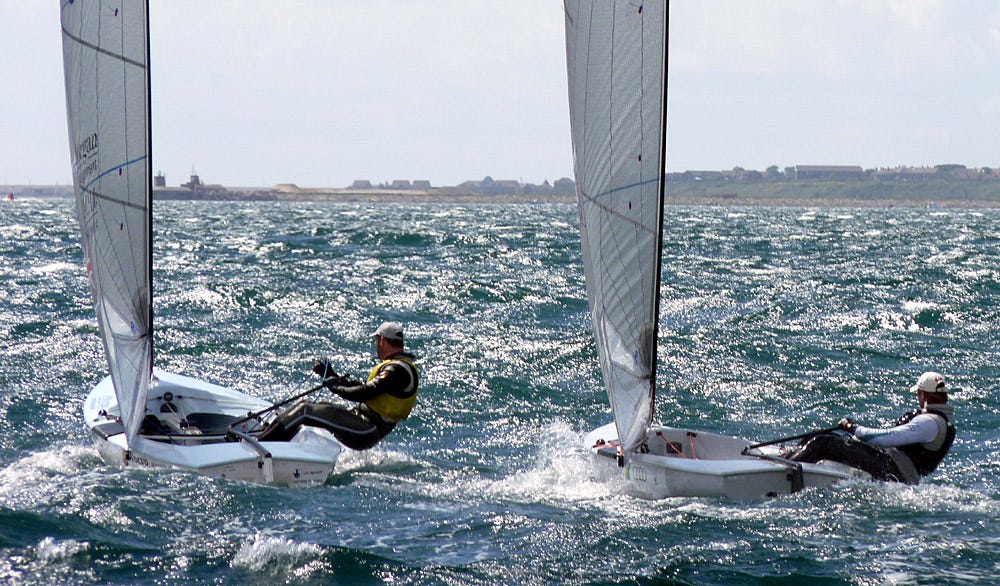
Brendan on the right, going head-to-head with Ben Ainslie
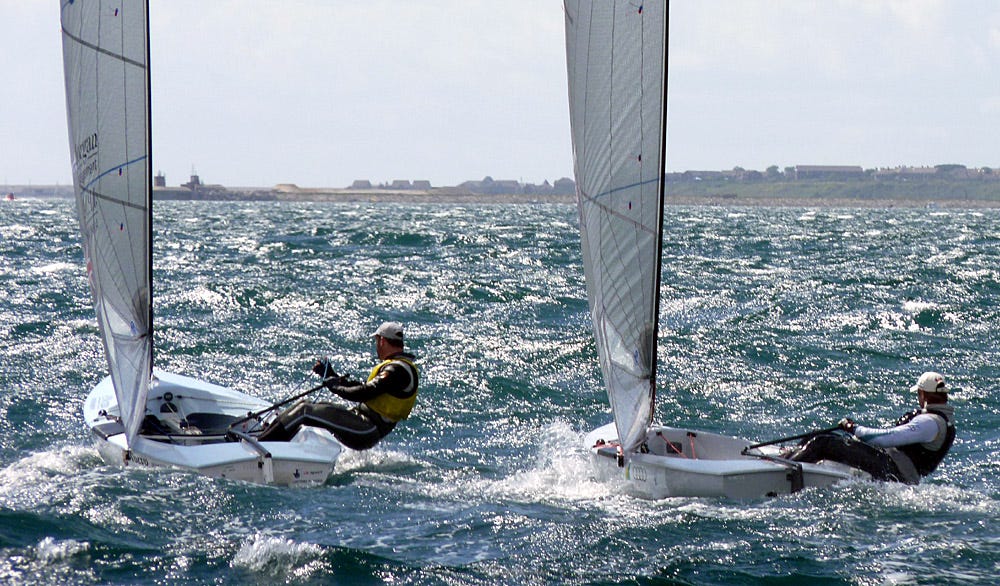
I had the chance to catch up with Brendan on a Zoom call this week.
When we spoke, Brendan was relaxed and still processing the past month of intense racing. It was the perfect moment to revisit his assault on the Finn World Masters title, trace the arc of his career, and reflect on the lessons that shaped the long road that ultimately led him back to the top of the fleet. The championship was only a couple of weeks earlier, yet his focus was already shifting toward the next event, defending the ILCA 7 Masters World Championship in Greece. Like many Finn sailors, he seemed far more interested in the process than the result.
To put his return to the top of international competition in context, it’s important to review his Olympic journey.
The Olympic Campaigns
Listening to Brendan describe his Olympic campaigns, I was struck by how close things came to unfolding differently. Some of it was bad luck, most notably the ankle injury that derailed his 2004 selection push. But Brendan is also candid about the bigger lesson. At that stage of his career, he admits he was not fully committed.
The 2004 Athens campaign saw Brendan sailing at a very high level in the Laser fleet. He finished fifth at the European Championships and was firmly in contention for Olympic selection. “2004 was really the one on my radar,” he said.
Maintaining that focus proved difficult. “I got distracted with other things. You’re half in this, half in that. If you’re going to do Olympic sailing, you must go all in. You put all your cards on the table and give it everything.”
Selection for the Australian team came down to a demanding series of regattas across Europe and Australia. Brendan and Michael Blackburn, a Sydney 2000 Olympic bronze medalist and Laser world champion, quickly emerged as the two leading contenders.
“We had four events for selection, starting with the nationals in Australia,” he recalled. “We finished third and fourth there, so I had a one-point advantage.”
The campaign then moved to Hyères in France, where the momentum shifted dramatically. “I rolled my ankle badly,” he said. “I finished the regatta, but I never really got the treatment needed to get back to full strength.” What followed was a steady slide in performance. “Michael probably podiumed at Kiel Week, and I didn’t even finish the event.” By the time the final regattas arrived, the outcome had become clear. “I bounced back for the nationals and Sail Melbourne, and it was close again,” he said. “But Michael was the better sailor, and he deserved to go to the Olympics.”
For the 2008 Olympic cycle, Brendan believed the Finn would ultimately suit him better physically. But the Australian program initially wanted him to remain in the Laser. His plan was pragmatic. First qualify for Australian Sailing Team support in the Laser, then try to make the transition to the Finn from within the program.
“I still really wanted to pursue the Olympic dream,” he said. “My thinking was to secure funding first.” That meant producing a result. At the 2005 Laser World Championship in Brazil, he delivered, as the top Australian, finishing seventh and earning selection to the Australian Sailing Team. But the plan to transition classes proved more complicated.
“I wanted to move straight into the Finn,” Brendan said. “Their philosophy was different. They encouraged me to stay in the Laser.”
When Tom Slingsby won the 2006 and 2007 world titles, it created the opening Brendan had been waiting for. The opportunity finally came a year before the Olympics, at a Finn test event in China, where he stepped into the elite class for the first time.
From there, the learning curve was steep. Anthony Nossiter had already represented Australia at two Olympic Games and was the established Finn sailor in the program. “At the Gold Cup, he finished tenth, and I finished fourteenth,” Brendan recalled. “He met the performance criteria, and I didn’t, so he was selected.”
For Brendan, the Olympic dream would have to wait.
The 2012 Push
Brendan’s final Olympic campaign began in 2010 after a two-year break from serious racing. When he returned, he went directly to Australian Sailing high-performance director Peter Condi and asked a simple question: What would it take to get back onto the team? The answer was blunt.
“If you don’t finish in the top ten at the Gold Cup,” Condi told him, “You won’t get any support from the team”. The 2010 Gold Cup, the Finn class world championship, was scheduled for San Francisco later that year. For Brendan, it became a clear line in the sand.
“I came back to sailing with a lot of intention for that regatta,” he said. “If I wanted any chance of going to the Olympics and performing well, I had to get back in the boat properly.” He built a plan around the event. Brendan organized a small training group with some of the best Finn sailors in the world, including Ed Wright, Rafael Trujillo, and Zach Railey. The four boats trained together intensely - “three days on, one day off,” he said.
He kept the campaign alive by coaching. After the training block in San Francisco, he travelled to Ireland to work with a U.S. Laser team before heading to Weymouth, where he borrowed a boat and mast from Zack Railey and raced another event to stay sharp.
Still, funding remained uncertain. Over coffee, Brendan asked Condi whether the program would support the Gold Cup by sending coach Mike Fletcher.
The answer was cautious. “There’s probably a low probability you’ll make the top ten,” Condi told him. Brendan pushed back. “So, when I get top ten, you’ll fund me, right?” Condi agreed. That’s all he needed to hear.
Meanwhile, the small Australian Finn group rallied behind the effort. Brendan and Rob McMillan bought boats in Europe and eventually shipped nine boats in a 40-foot container to the United States. McMillan helped run the campaign logistics, while Henry Bagnall and Chris Caldecott supported the team on the water. When the racing finished, Brendan had delivered exactly what he promised. He finished 10th! “Victor Kovalenko, the renowned super coach, called me the moment the regatta ended,” Brendan recalled. “He said congratulations and welcome back to the team.”
From that point forward, the 2012 Olympic campaign was officially underway.
Hyères: The Full Circle Moment
For Brendan, the final Olympic qualification regatta in Hyères was his last chance. After falling short of the selection criteria in earlier events, the equation was simple: he had to win. Second would not be enough for the Australian team.
It also carried a deeper significance than most realized. It was the same venue where his 2004 Olympic campaign had unraveled.
During the selection series eight years earlier, Casey had rolled his ankle badly while competing in Hyères. The injury disrupted the remainder of the trials and sent his results into a downward spiral. The Olympic opportunity slipped away.
Now, in 2012, the road back to the Games once again ran through the same stretch of water on the French Mediterranean coast. This time, the stakes were clear. The 2012 Hyères World Cup would determine whether Brendan would earn Australia’s Finn berth for the London Olympics. For him, it represented both a final opportunity and a chance at redemption.
The medal race was sailed in classic Finn conditions. The wind was pushing past 30 knots, and the sea state was chaotic, and the final regatta places would be decided. Peter Condi and I were in the coach boat watching the race unfold.
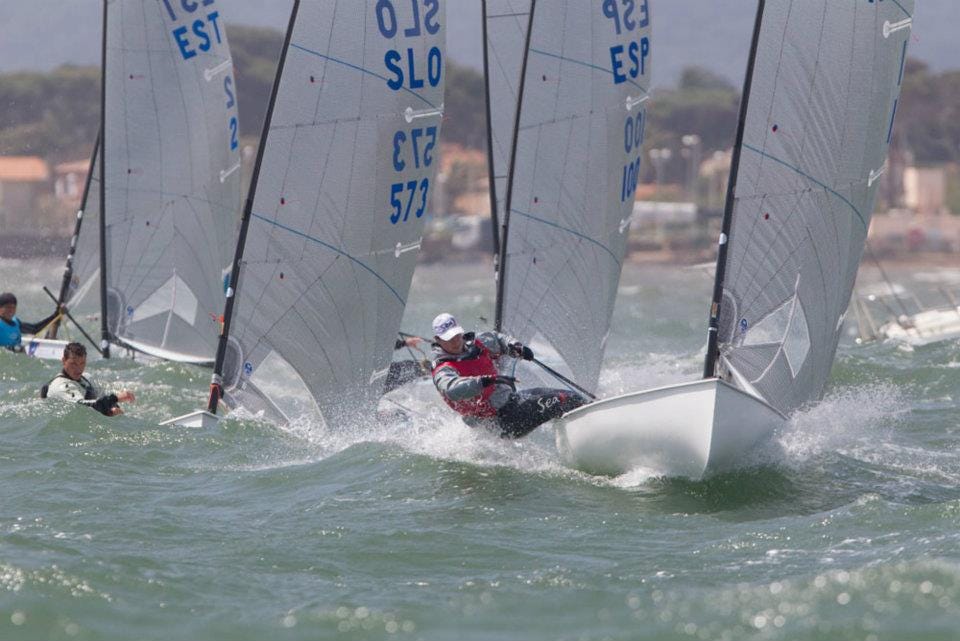
As Brendan sailed past before the start, the last thing I said to him was simple. “Be aggressive downwind. Go for it.”
In a Finn, that is the only way to sail off the wind in those conditions. You have to commit completely. If you hesitate, that is when the boat punishes you. “Rafa” Trujillo appeared to have the regatta wrapped up going into the medal race, but Brendan still had a mathematical chance if the points fell the right way.
Brendan attacked the race. He sailed the downwind legs aggressively by the lee, flirting constantly with the edge of control while much of the fleet chose the safer option. The approach worked. Brendan won the medal race convincingly while Trujillo struggled deep in the fleet.
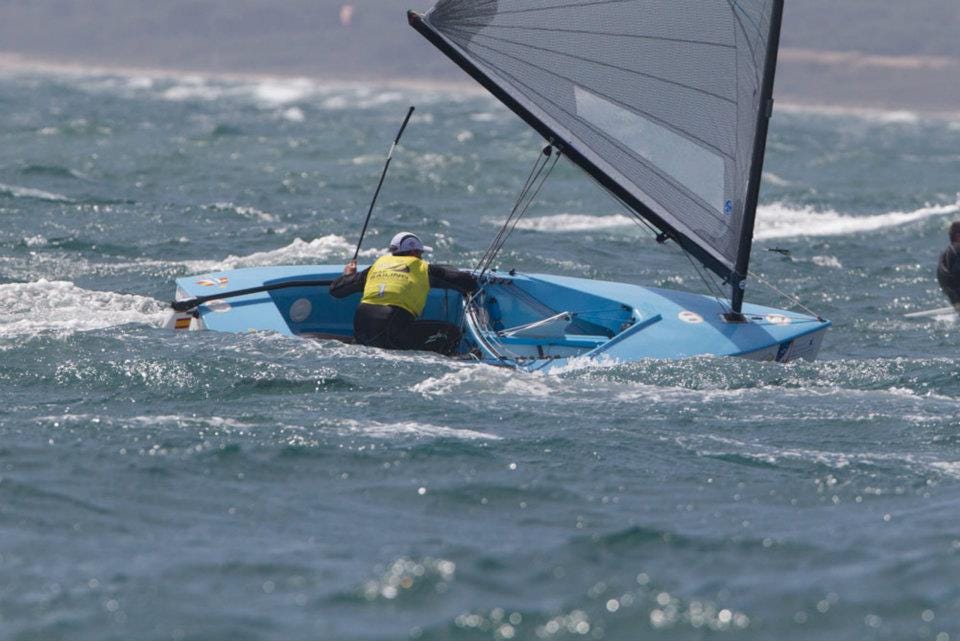
From the coach boat, Condi and I began counting the points as each boat crossed the downwind finish line. Everything came down to the battle between the Russian sailor, Alexey Selivanov, and Trujillo.
Trujillo had almost done enough to win, but Alexey Selivanov (RUS) screamed across the finish line just metres ahead of the Olympic silver medalist to deny Trujillo the title by just 0.4 points.
Condi and I looked at each other in disbelief. Brendan had won the regatta by less than a point. After more than a decade chasing the Olympic dream, Brendan had finally secured his ticket to the Games. The symmetry of the moment was impossible to ignore. The same venue that had once derailed his Olympic campaign had now delivered it.
London
At age 35, Brendan finally arrived at his first Olympic Games. For most sailors, the Olympics represent the culmination of a long campaign. For him, it felt more like the end of a long road just to reach the starting line.
The Australian Sailing Team entered the London Games as one of the strongest squads in the world. Expectations were high across several classes, and the team would ultimately finish the regatta as the most successful sailing nation of the 2012 Olympics.
Brendan’s own regatta began with an immediate setback. On the opening day of racing, the hull-to-deck joint on his Finn failed, forcing him to retire from the early races. In a fleet where every race matters, the damage proved difficult to overcome. Casey fought through the remainder of the regatta and eventually finished 13th overall. It was not the result he had hoped for, but the experience itself carried lasting meaning.
Looking back now, Brendan sees the Olympic campaign as part of a much longer journey rather than a single moment. One regret stands out. During the Games, he followed the team's advice to limit distractions and keep his circle small, focusing entirely on performance. In hindsight, he wishes he had done the opposite. “I was told not to have too many people around,” he said. “But when you see everyone else with their families there, you realize how much energy that support can give you. It was a lesson that would shape how he approached the Finn Gold Cup and Master World Championship.
The Return
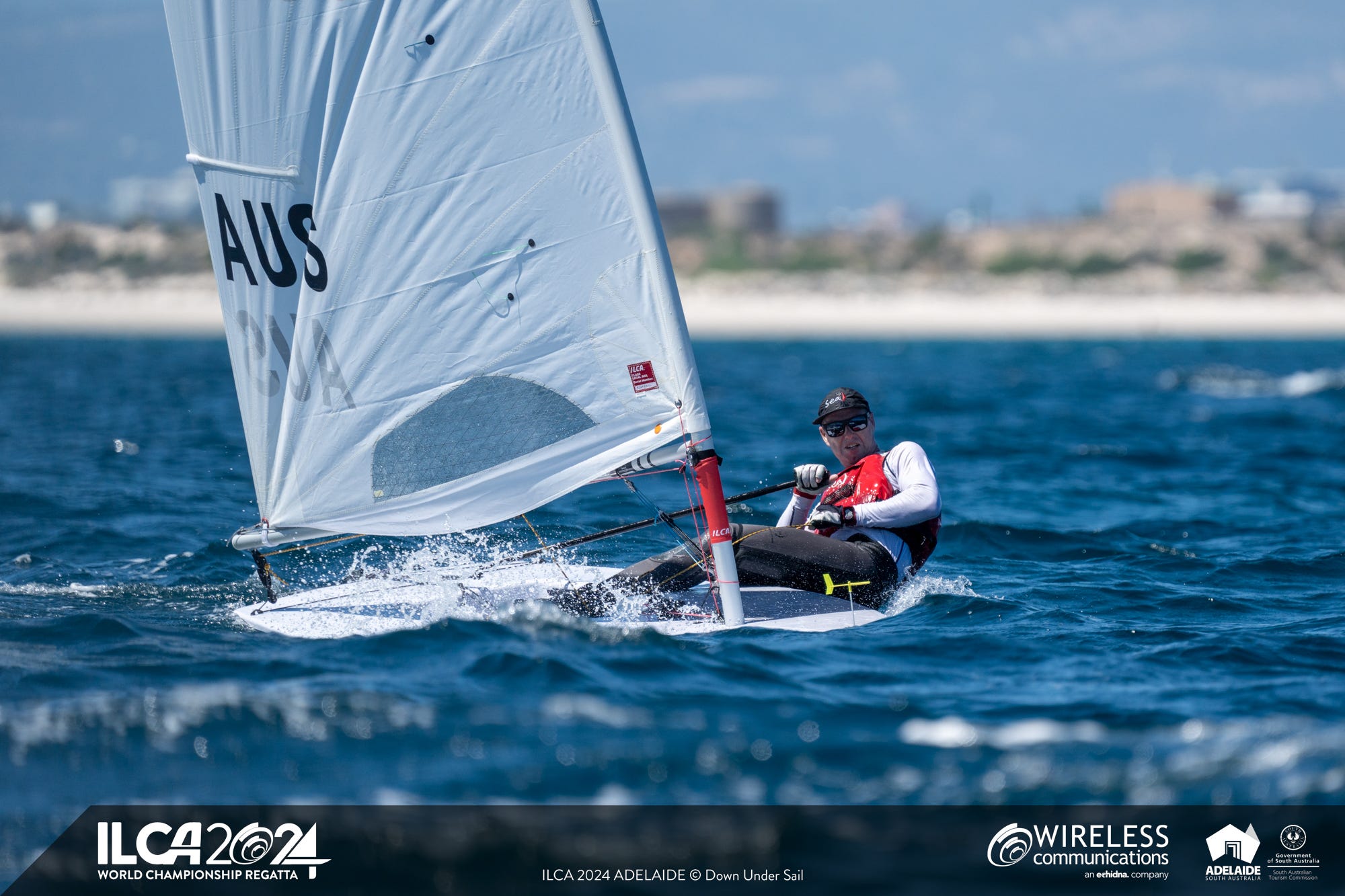
The return to the Laser, now the ILCA 7, did not begin with a grand plan. It started almost on a whim. Brendan was in Adelaide over Christmas visiting family, with no expectations beyond getting back on the water. “I took my sailing gear with me just to go for a couple of sails,” he said. He hadn’t been in a Laser in 18 years.
During his break from competition, he had been coaching with the Australian Sailing Team and earlier with the US Sailing development team. He spent the time observing, and it changed how he saw the class. “I got to learn from watching Matt Wearn, a multiple-time world champion and double Olympic gold medalist, and the way he sails the Laser. Some of those techniques helped me in both the Finn and the Laser.”
With only a couple of days back in the Laser, Brendan found himself sailing alongside Jean-Baptiste Bernaz, a world champion and multiple-time Olympian. “We went upwind, and he was heckling me the whole time, which was great,” Brendan said. It had been nearly two decades, and the body felt it, but downwind, something clicked. “We did a long run, and he didn’t get that far in front. I thought, okay, that’s promising.”
Bernaz saw it too and did not hesitate to say it. “You’ve got to do it. You’ve got to come back.” For Brendan, that moment was enough. “I hadn’t been in a Laser for 18 years,” he said. “But it still felt right.”
With a minimal amount of training, Brendan found himself back at the front of the fleet, winning the Adelaide 2024 ILCA 7 Masters World Championship.
But the Laser was only the beginning of the story. What began as a tentative return to competitive racing became something more substantial with the Finn Gold Cup and Master World Championship in less than two years. Brendan found himself back in the Finn full-time, preparing for a different challenge on Moreton Bay.
2026 Finn Masters World Champion and Finn Gold Cup Bronze Medalist
A week after placing 3rd at the Finn Gold Cup, Brendan won the 2026 Finn World Masters Championship in Brisbane, becoming the first Australian to claim the title. For Brendan, the victory represented more than another regatta result. This regatta was the latest chapter in a career defined by persistence and longevity at the highest levels of the sport.
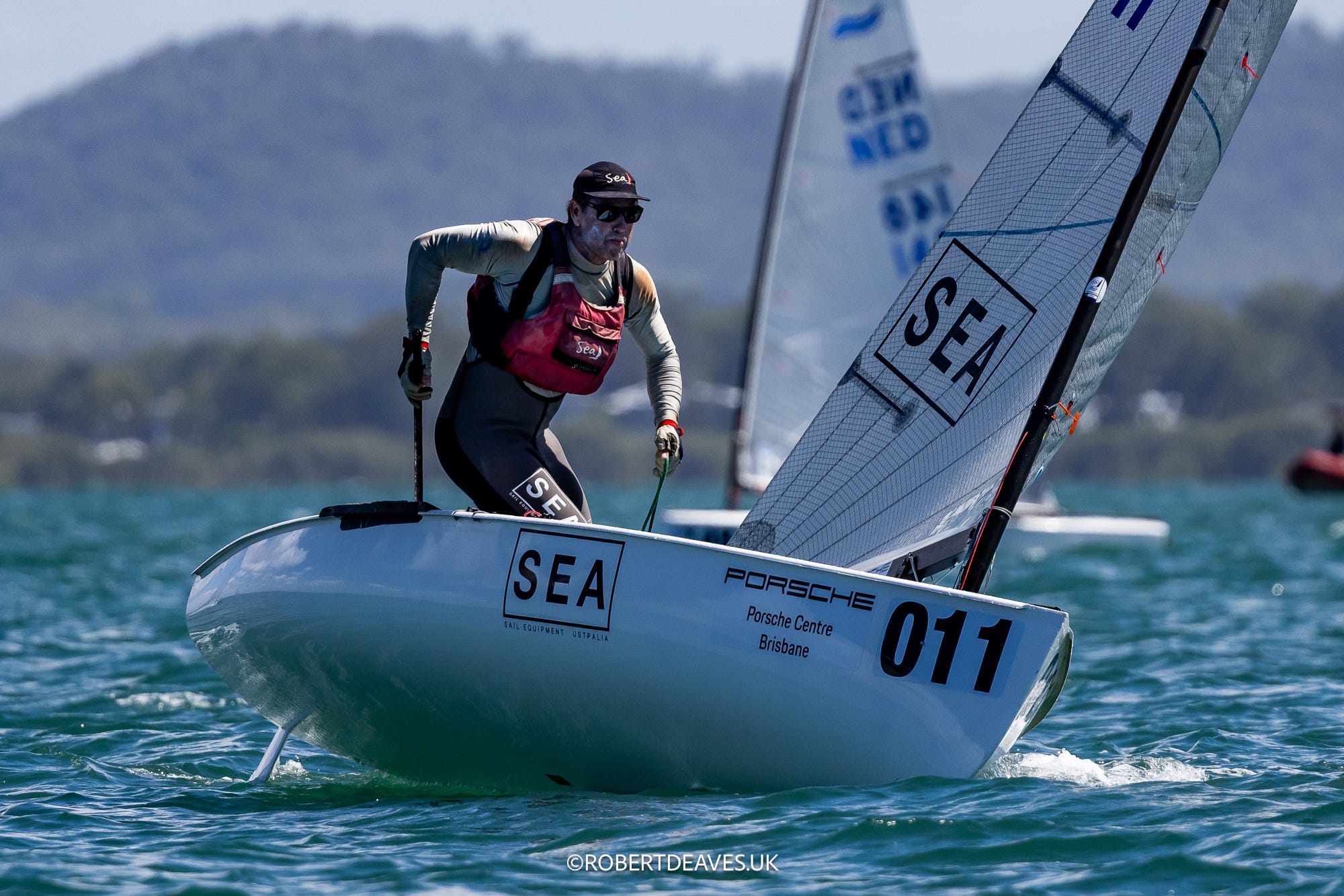
The Championship, titled the Porsche Centre Brisbane regatta, brought together 107 sailors from 16 nations on the waters of Moreton Bay, Australia, setting the stage for one of the most competitive Masters fleets in recent years. Brendan set the tone early in the championship with wins in the first two races, adding a third victory midway through the regatta to establish himself as the sailor to beat. The championship came down to the final day.
Preparing the Body
Racing a Finn on Moreton Bay, Australia, demands a level of physical preparation that few other dinghies require. The breeze is often strong, the chop relentless, and the boat itself unforgiving on the body. Brendan approached his preparation no differently than he had during his Olympic campaigns. He began building fitness in June, mixing gym work with rowing sessions designed to rebuild endurance for the physically demanding class, which allows unlimited pumping in windy conditions.
“I did a lot of rowing—both sprint work and longer sessions,” Brendan said. He also committed to sailing the Royal Queensland Yacht Squadron club series nearly every weekend, using the regular racing as structured training.
One small technical discovery proved just as important as the physical work. After months of knee pain, Brendan borrowed a boat during training while his own was undergoing final preparation. In the process, he discovered a different hiking strap configuration that solved the problem.
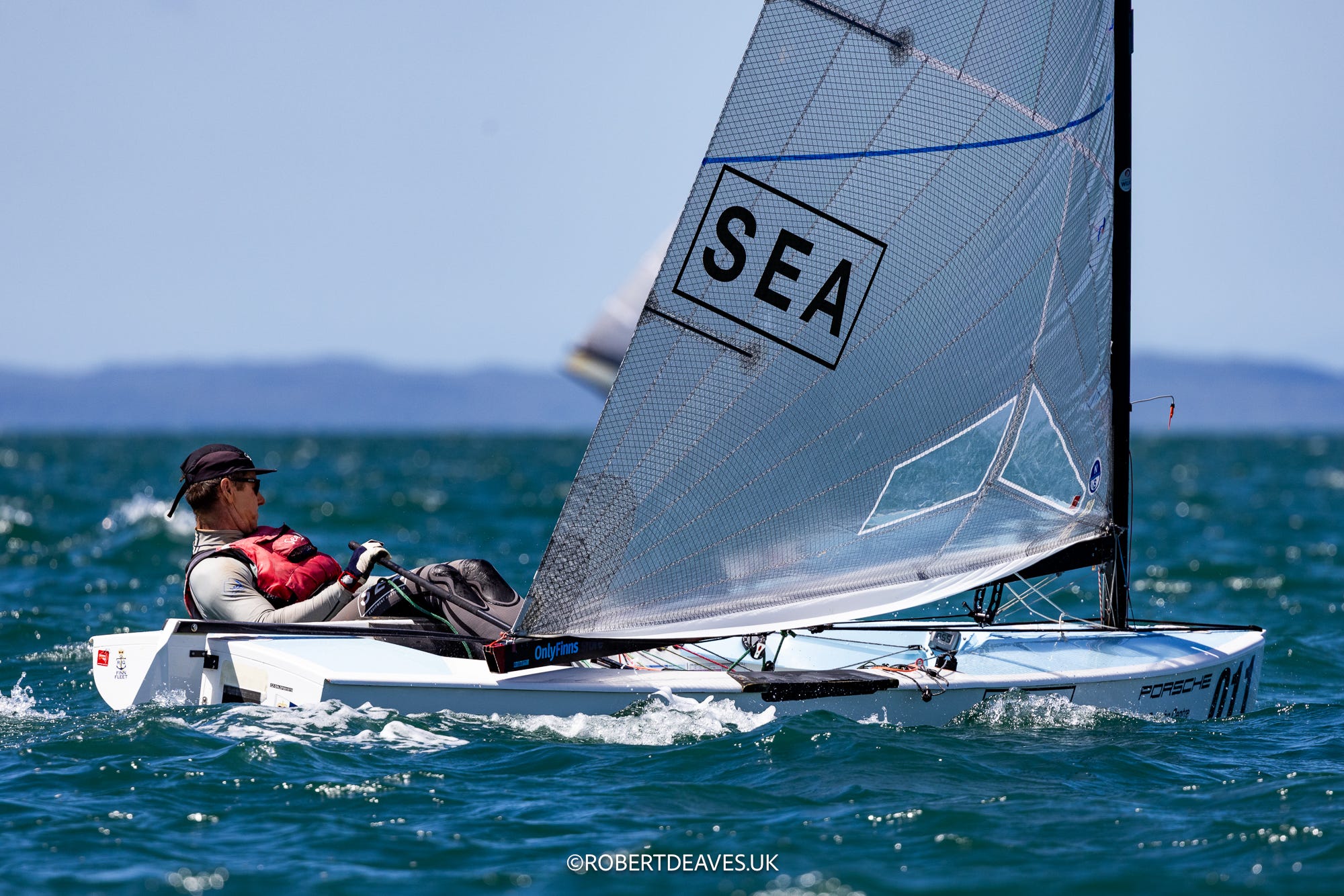
“I put my boat in to get repairs and fairing on the hull. Stuart Watson, one of the main people behind the Finn event, lent me his boat. Another gentleman had changed the positions of the hiking straps. I went out and found that was the position for me, with the riser height, and I didn’t have any knee pain. Suddenly, I could hike more consistently, knee‑pain free. I only found that in November, after three or four months of knee pain.”
The Championship Week
The Finn World Masters series was a 7-race regatta, and the opening days put Brendan firmly in control of the regatta. Strong starts and consistent results gave him an early advantage in the standings. But Finn regattas rarely unfold without complications.
One difficult race midway through the series nearly changed the shape of the championship. A hard right-hand shift caught Brendan on the wrong side of the course, forcing him to fight back through the fleet to finish 15th while Spain’s Rafael Trujillo scored a third. Suddenly, the door to the championship was open.
Old rivalries rarely disappear in the Finn class, and it quickly became clear that the regatta would come down to Brendan and Trujillo just like it did more than a decade earlier in Hyères.
The Final Day Duel
The final day opened with Brendan leading the regatta, but in a far more vulnerable position than the standings suggested.
His series included a 15th-place finish that he was carrying, while Trujillo was discarding a sixth. It left Brendan exposed.
The equation was simple. If Trujillo could push him back to 13th or worse in the final race, the title would be his. In that position, the pressure shifts. You are no longer racing the fleet. You are racing one boat. The breeze settled into the 15 to 18 knot range, conditions that favored Trujillo’s upwind speed.
“It was Rafa’s breeze,” Brendan said. “He was always going to be faster upwind. My strength was downwind.” In the first race of the day, Trujillo edged ahead early, but Brendan stayed close enough to respond.
The last race became exactly what the situation demanded. A two-boat battle.
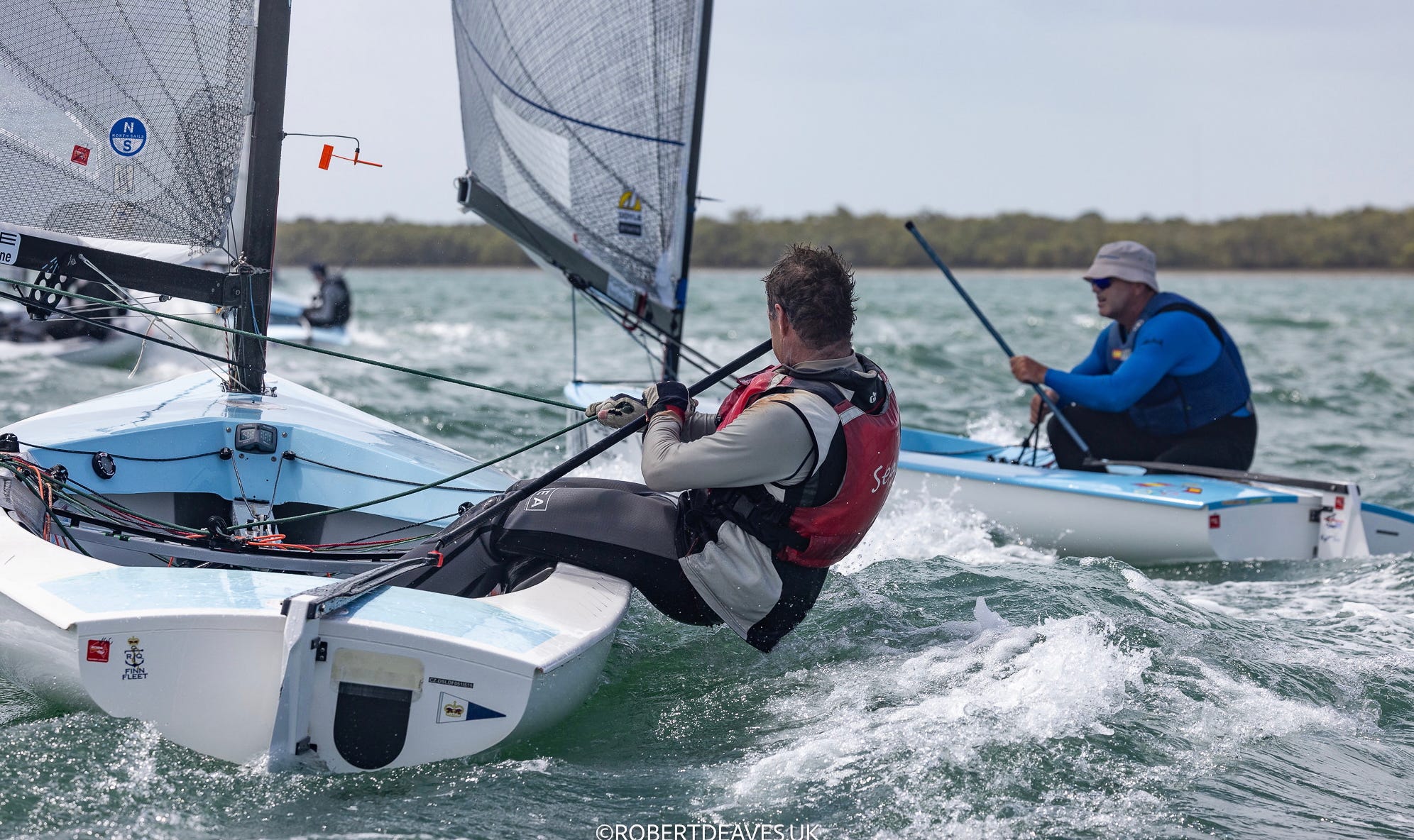
Both sailors ended up on the unfavored right side of the course while the rest of the fleet split left. It was the perfect situation for Trijillo. When the breeze built toward 25 knots, Trujillo made his move. “Rafa just planted one right on me,” Brendan said. The rivalry briefly turned “conversational” as the two sailors traded comments about their battle at the Hyères World Cup years earlier, as the tension came to the surface.
From that point on, they were no longer racing the fleet. They were racing each other. In covering and controlling one another, they gave away positions to the rest of the fleet, slipping deeper than either would have in a normal race. Trujillo did not need to win the race; he only needed to control Brendan and push him back to 13th place.
By the final run, both sailors had been pushed well back, a direct consequence of racing each other instead of the fleet. At the top mark, they were buried deep in the fleet. Downwind, Brendan made his move. “I waited for a puff and went at him.”
Brendan crossed the line in 11th, Trujillo followed in 12th. It was enough. After seven races, the Finn World Masters Championship was decided by a single point.
The Team Behind the Title
In the days following the championship, Brendan heard from sailors across the world. Messages arrived from former teammates, competitors, and friends from every stage of his career.
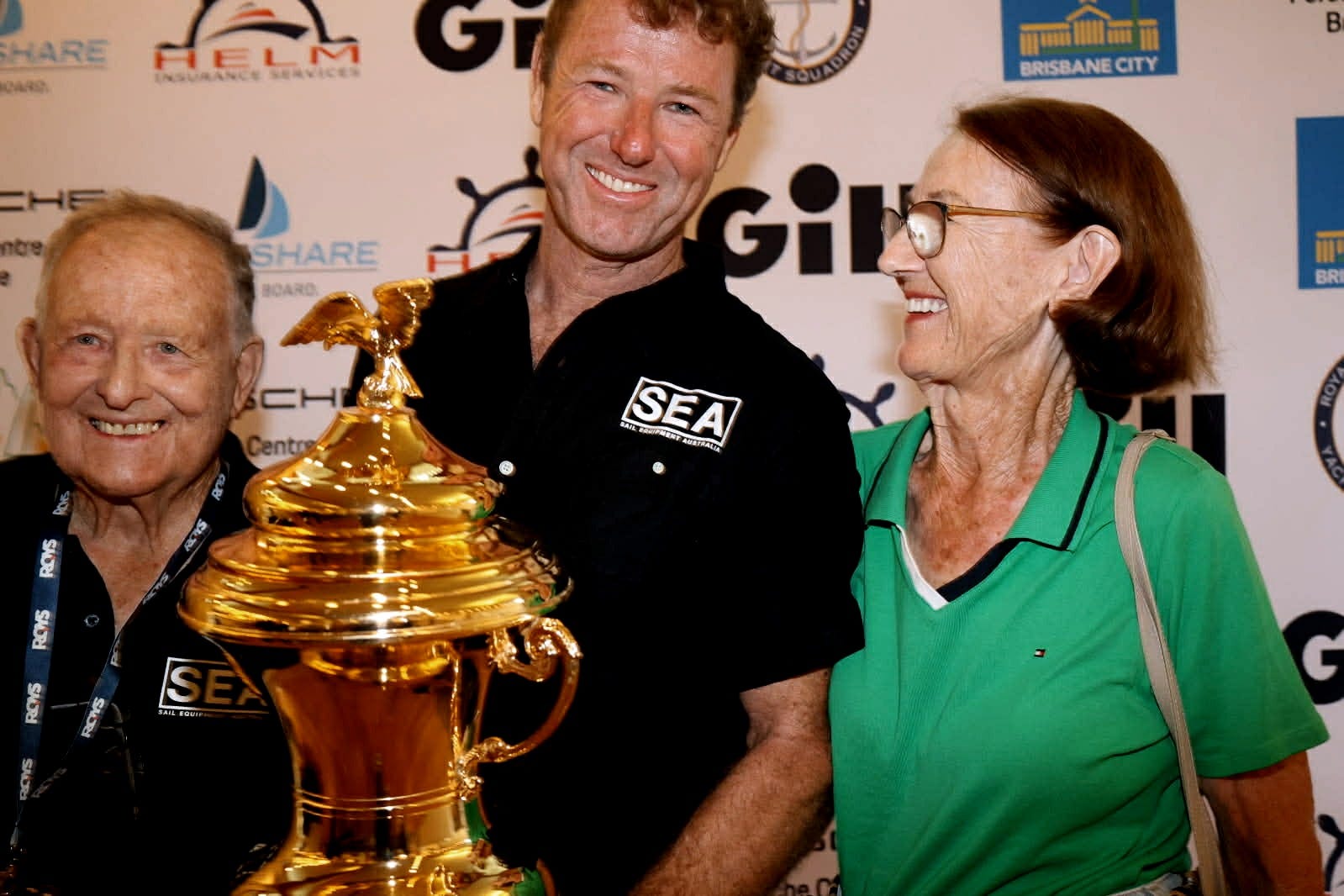
But the victory on Moreton Bay also belonged to a much closer circle. Brendan’s parents were present throughout the regatta, following the racing each day from the water. Friends helped ensure they could stay close to the action, arranging rides to the media boat and helping them move around the racecourse. “My dad was really into it,” he said. “He came up every day and watched. Family was at the center of the experience. Brendan’s wife, Sarah, and their two children, Pierce and Lulu, were able to be part of the week as the championship unfolded.
Local sailors also played a critical role behind the scenes. Members of the Royal Queensland Finn fleet helped with preparations, logistics, and support throughout the month of sailing in Brisbane. Coach Adrian Finglas was closely involved in the lead-up to the event and followed the racing throughout the regatta. “They probably don’t even know what they did,” he said. “But they all played a role.”
For Brendan, the support network represented a change from the intensity of Olympic campaigning earlier in his career. “When you’re doing Olympic sailing, it becomes very selfish,” he said. “This time I wanted it to be inclusive.” In the end, the Finn World Masters title may have been decided by a single point on the racecourse. But the journey to that moment, Brendan says, was shared with many more people than just the sailor in the boat.
What the Journey Taught Him
Looking back now, Casey is candid about that early period of his career. “I probably didn’t achieve everything I could have in the sport,” he said.
Around 2000, he launched Sail Equipment Australia (SEA), a technical sailing clothing business that quickly became a significant commitment alongside his racing. “I was always doing something. I wasn’t concentrating on one thing.” “When you’re younger, you probably don’t have the maturity or the tools to manage everything,” he said. “You need the right people around you, and you need to be fully committed.”
With the perspective of time, Brendan sees that period as a lesson many talented young sailors eventually confront. Early success can open doors, but it does not guarantee the path forward. At the time, he was competing in one of the deepest Laser fleets in the world. Australia’s Laser class during that era included sailors such as Michael Blackburn, whose preparation and discipline set the standard.
“I was a good young sailor,” Brendan said. “But racing someone as prepared as Michael Blackburn was a big learning experience.” “If you’re going to do Olympic sailing, you have to go all in,” he said. “You put all your cards on the table and give it everything.”
After the Finish
In the moments after racing ended on Moreton Bay, there was no immediate sense of celebration.
The result had come down to a single point, and for a few minutes it was not entirely clear how it had fallen. Brendan didn’t know if he had done enough. The numbers were being checked. The reality of it took time to settle. Then it became clear. Brendan had won.
“I crossed the finish line and didn’t know if I’d won,” he said. “I’d put everything out there and was completely spent, not just from that race but from the whole month of sailing.”
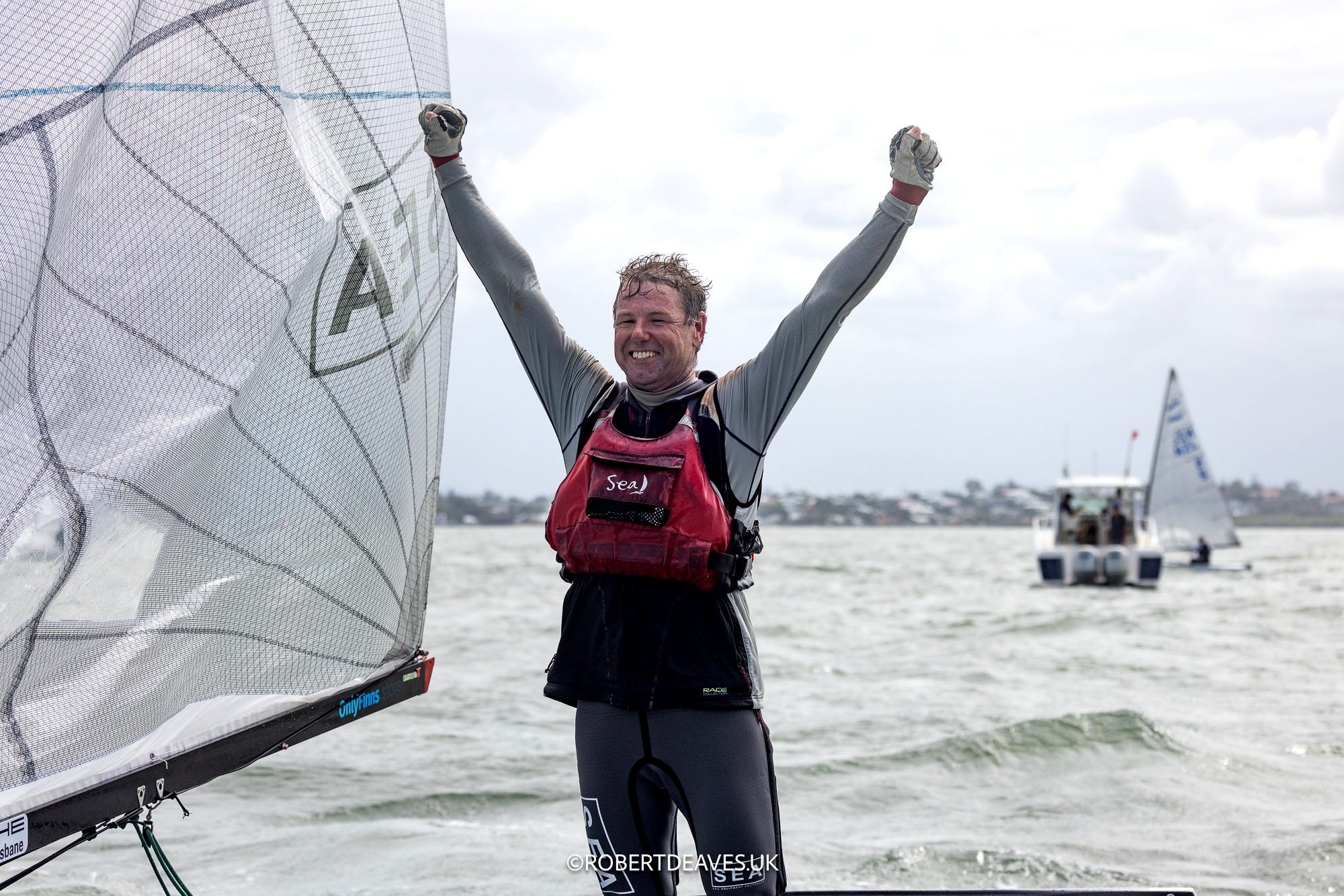
There was no outward release. No dramatic reaction. Just a quiet understanding of what it meant. “When it finally became clear, it was relief more than anything. And satisfaction. Not just with the result, but with how it all came together.”
For someone who had spent decades chasing results that never quite came at the right time, there was a symmetry to it. This one had. “Sharing it with family, friends, and the people who supported me made it a really special experience.”
My Reflection
As an Olympian, looking back and having watched Brendan’s career up close, it is hard not to wonder how it might have unfolded under a different set of choices. The talent was always there. The skill never left him. With different guidance or a narrower focus, it is easy to imagine a version of the story in which he is standing on an Olympic podium. But that is not how Brendan sees it.
His career was never defined by chasing a single outcome at the expense of everything else. It unfolded differently. At times, he stepped away, built a business, coached, started a family, and lived a life beyond the narrow lane of Olympic campaigning. In doing so, he gained something many athletes only come to understand much later. Perspective.
Racing success in Brendan’s case did not follow a straight line. After a promising early career, eventual success came later, shaped by experience, balance, and a deeper understanding of what mattered.